
Would you fill your vehicle with contaminated fuel? Would you use low-quality engine oil in your car, which you’ve worked hard to purchase? So, why do we often neglect our own bodies, feeding them anything and everything without thought?
We’ve all witnessed older generations in our families who remain in great health, while their children struggle with conditions like diabetes, high blood pressure, thyroid problems, and PCOS. Have you ever wondered why that is? If genetics were the sole factor, the parents would likely have experienced these issues too. Yet, it’s the younger generation facing these ailments, while the older generation seems relatively healthier. In fact, these conditions were so rare just a few decades ago that they were almost unheard of.
The truth is, we are what we eat—literally. When you consume food, your body works to distribute the nutrients to perform various functions such as digestion, hormone regulation, and brain activity. A diet rich in healthy, nutrient-dense food ensures that every part of your body gets the nourishment it needs. On the other hand, feeding your body poor-quality food leads to nutrient imbalances, which can result in malfunctions of different body systems, eventually diagnosed as disorders.
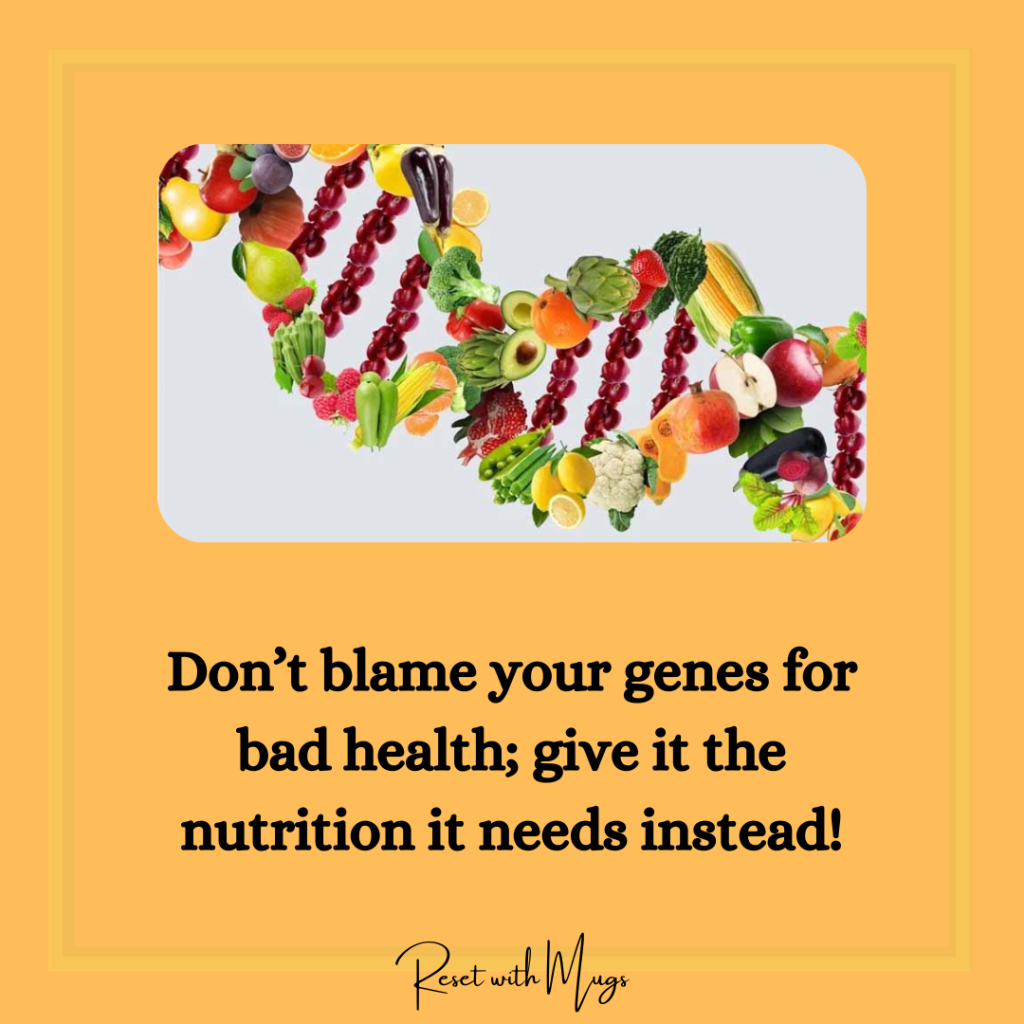
Delving deeper, this happens because your genes turn “off” and “on” based on nutrient availability. A well-nourished body provides the necessary nutrients for all genes to function properly, while a poorly nourished body may deactivate certain genes due to lack of resources.
Think of it like this: If you face a water shortage at home, you would prioritize its use for essential tasks, like cooking and using the toilet, over non-essentials like washing the car or mopping the floor. This is similar to how our genes respond—prioritizing critical functions when resources are limited.
The good news is that these genetic changes can be reversed by improving your lifestyle and habits. Better nutrition, staying physically active, and developing a healthy routine are key to restoring balance. However, ignoring these changes may lead to permanent genetic shifts, and there’s a real possibility YOU COULD PASS ON THESE UNHEALTHY GENES TO YOUR CHILDREN.
Having a healthy lifestyle and routine also means, even if you have been passed on unhealthy genes, you could nourish your body well enough to prevent the onset of disorders. In other words, you could prevent those genes from being switched “on”.
For all you know, you might be having excellent genes but if your nutrition is poor, your health will also be poor and this could be inherited by the next generation. Remember, you can exchange your car if it malfunctions but you have only one body with no return/exchange. Keep it fit and thriving.


Leave a comment