
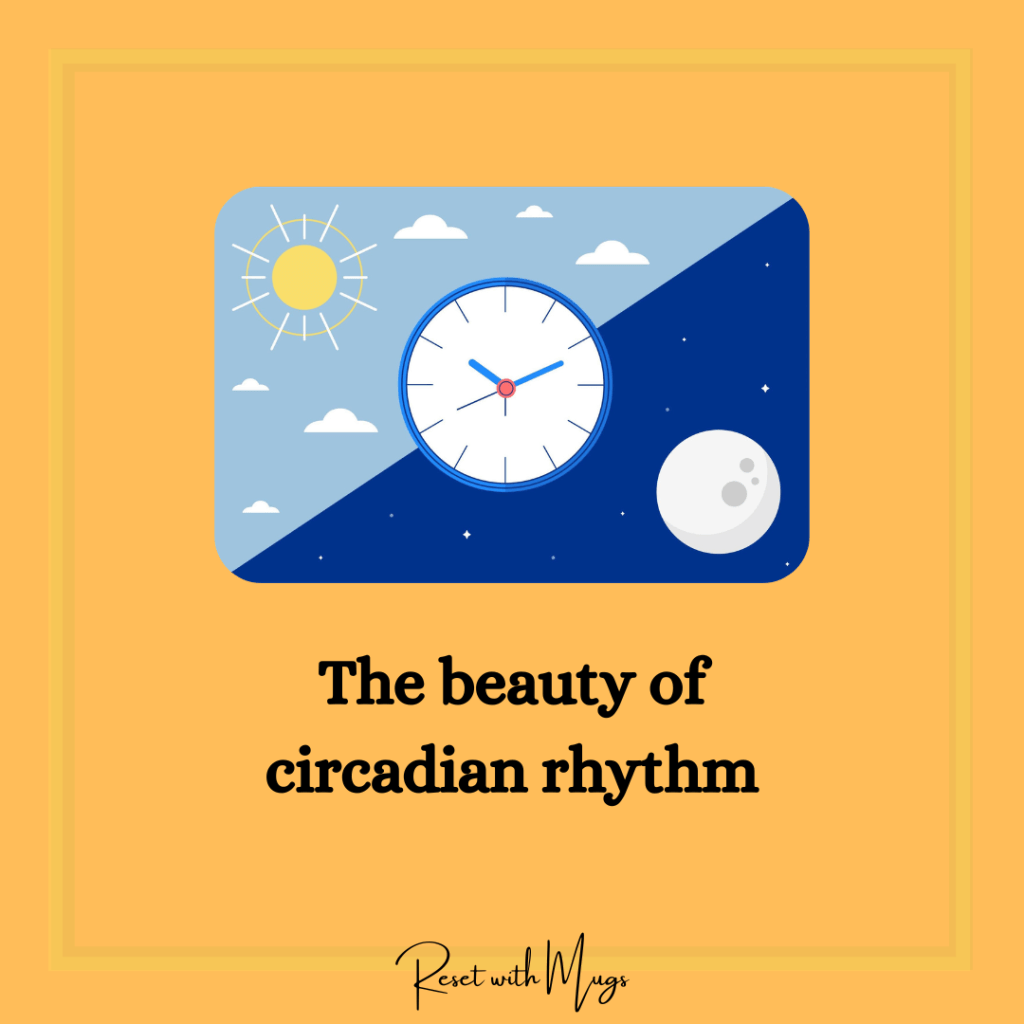
Circadian rhythm is the pattern of your body’s internal clock which governs very important aspects like hormones, digestion, body temperature and sleep. This rhythm is naturally set by the brain but is very much influenced by external factors. How we spend each and every day plays a major role in the functioning of our body’s internal clock.
Why it so crucial for good health?
Most of the diseases and disorders that we end up getting diagnosed with are directly or indirectly linked to our body’s circadian rhythm, or rather, its misalignment.
Circadian rhythm misalignment happens over years of consistently following poor habits. Some factors are –
- Inadequate exposure to natural light during the day
- Poor sleep habits (Untimely naps, sleeping in bright noisy areas, staying awake too late at night watching TV/phone or working with bright lights on, sleeping till noon during daytime)
- Food intake (snacking in the middle of the night, untimely meals)
- Stress (This is a no brainer)
- Physical activity (Lack of exercise/daily movement)
- Job/travel (night shifts/ frequent travel through multiple time zones)
- Social circle (drinking/smoking)
Your body is smarter than you think. It gives out signals to tell you that things are not going right inside and you need to buck up and discipline yourself. Some of those signals are –
- You face trouble falling asleep
- You also face trouble staying asleep
- Constant fatigue, random headaches
- You feel the need for a long nap during the day
- Delay in wound healing
- Hormonal fluctuations like irregular periods, terrible mood swings
- Troublesome bowels
- Body temperature fluctuation which ends up with you getting sick often
We know that essential functions like sleep, hunger and reproduction are regulated by hormones. When your circadian rhythm is misaligned, the first thing that gets affected is hormone function. They struggle to behave in their usual manner because our internal clock is not being followed as it’s supposed to be.
These small signs compound over years to bring out big disorders in us like hypothyroidism and PCOS.
Course correction in the form of lifestyle changes become very essential to bring our internal clock on track to maintain good health for years to come.
So how do we get our circadian rhythm back on track?
- Start with building a routine and sticking to it. Not from Monday to Friday, the routine should be for 7 days a week. Eat on time, sleep on time. It’s really the most basic stuff.
- Don’t stay cooped up indoors, step out for a good part of the day. Exposing your body to light during the day is an excellent way to reset your internal clock.
- Get some physical activity in your day. I don’t mean just exercise, you need to really move around and do some basic chores around you. Stay active by moving. Not in front of netflix!
- Build a stable sleep environment. That involves-
- setting a decent bedtime before 11 pm every night
- winding up work and dinner 2 hours before bedtime
- avoiding screens 2 hours before bedtime alteast
- dimming lights
- building a sleep routine (brush your teeth, change clothes, wash your face, etc)
- Avoid caffeine 4 hours before bedtime. This is a no brainer, you do not want to stay in alert mode when it is time to go to bed.
- Avoid naps during the day. Naps can disrupt your sleep hormone melatonin from functioning well at night.


Leave a comment