
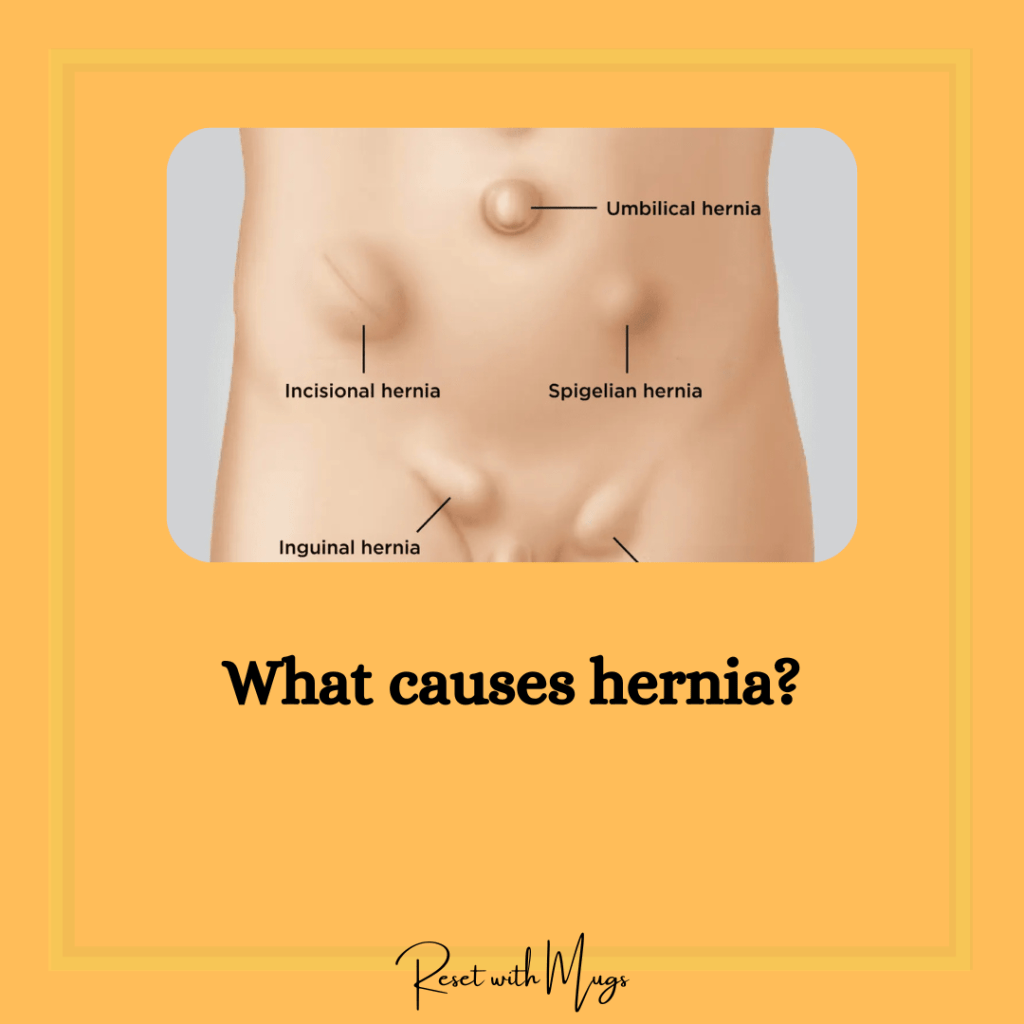
When your muscles are weak and you place more pressure on them than they can handle, the organ or tissue supported by that muscle may become displaced, creating a bulge that is visible externally. This condition is called a hernia, and it most commonly affects the groin or abdominal area in individuals with weak abdominal or pelvic floor muscles.
How does it feel?
The bulge can be painful and feels like something is being pulled, accompanied by pressure and discomfort. In the early stages, the displaced tissue or organ can move back into its normal position when lying down, which is referred to as a reducing hernia. If left untreated, this can progress to a strangulated hernia, where the organ becomes stuck. This is a serious condition and may cause symptoms like nausea, vomiting, fever, and a color change in the bulge, requiring immediate medical attention. At this stage, surgery is needed to repair the hernia, typically using stitches or a mesh patch to secure the organ in place.
What causes it?
- Lifting heavy objects with insufficient core strength
- Weak abdominal or pelvic muscles
- Congenital weakness in muscles
- Frequent straining while urinating, defecating, or coughing
Types of hernias:
- Inguinal hernia: A part of the intestine bulges into the lower abdomen.
- Femoral hernia: A bulge in the outer groin area.
- Umbilical hernia: Intestinal bulging through the abdominal wall, creating a bulge in the belly area.
- Hiatal hernia: Part of the upper stomach pushes through the diaphragm.
- Incisional hernia: Tissue bulges out from a surgical incision.
Dealing with a hernia, undergoing surgery, and recovering from it can significantly impact your quality of life. However, there are simple lifestyle changes you can make to help prevent this condition from developing in the first place.
- Strengthen your muscles – Make exercise a regular part of your routine! Focus on strengthening your pelvic and abdominal muscles with weight training. When lifting heavy in the gym, consider wearing a belt to help manage pressure in the abdominal area.
- Warm up properly – A good warm-up is essential. Focus on warming up all your muscles to ensure they are flexible and ready for your workout.
- Work on your posture – When lifting anything heavy, bend your knees instead of your waist. This reduces the pressure on your abdominal region.
- Maintain a healthy weight – Extra fat around the abdomen can restrict your muscles’ movement, so aim for a healthy weight to help prevent strain.
- Avoid constipation – A diet rich in fiber will help you avoid constipation and reduce the risk of straining during bowel movements.
- Control blood sugar levels – High sugar levels can weaken your muscles, so it’s important to keep them in check to maintain muscle strength.
By incorporating these changes into your daily routine, you can lower the risk of developing a hernia and improve your overall health!


Leave a comment