
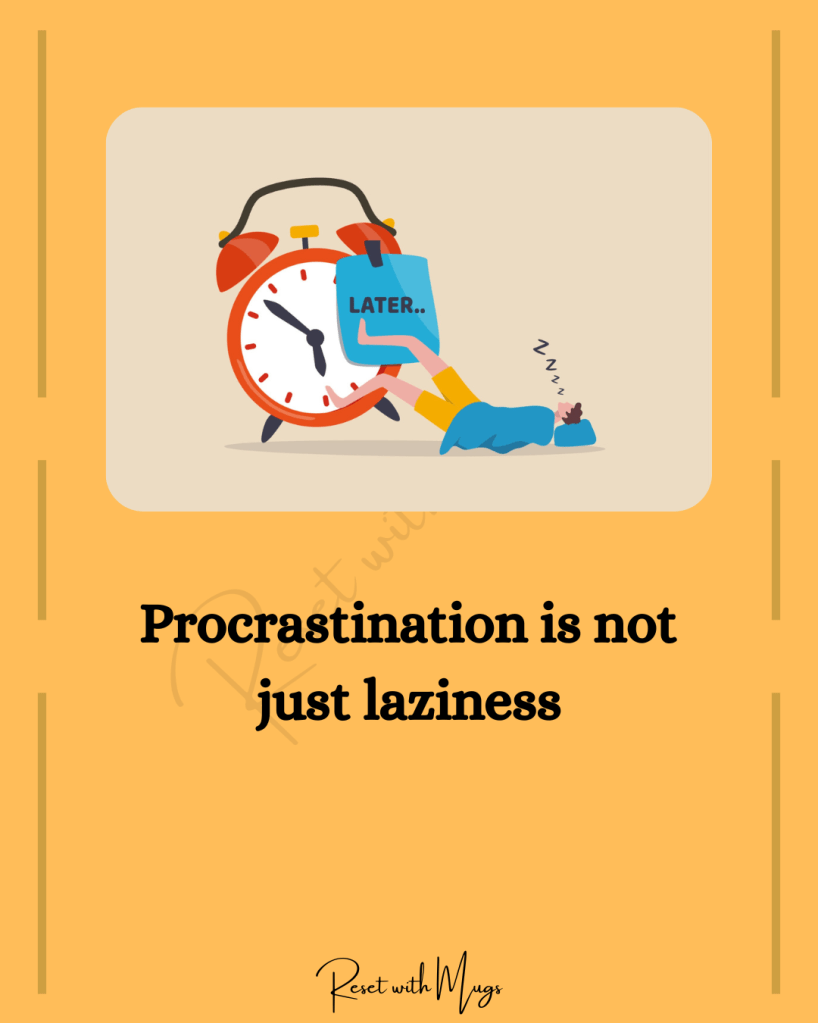
Procrastination is often a behavioral pattern rooted in high stress levels and low self-esteem. It commonly appears as the avoidance of difficult or important tasks in everyday life. People who procrastinate tend to seek immediate gratification—like scrolling through social media, watching TV, or indulging in junk food—instead of putting in the effort required to complete a task. This happens because when we are stressed, our brain’s reward system favors short-term pleasure over long-term effort.
While procrastination can be associated with conditions like anxiety, ADHD, and depression, chronic stress is one of its most widespread causes. We often seek quick relief to feel better in the moment (a dopamine boost), without realizing that delaying tasks only increases stress over time. What begins as a lack of self-belief or distraction can spiral into fear and anxiety, pulling us further away from completing our goals—a vicious cycle.
There are many strategies to manage procrastination, but the first step is acknowledging it as a real issue—not just putting off dealing with it.
- As much as your mind resists the task, just start! Taking the first step builds momentum and motivates you to finish it.
- Start with making a small list of things you can accomplish each day. Do not overestimate your time and set yourself up for failure. You need to build your self esteem with tasks you can complete before you can take on tasks that require more effort.
- As a long-term habit, reduce exposure to distractions like social media and TV to break the cycle of instant dopamine-driven rewards.
When you begin to value long-term achievement over temporary pleasure, the grip of procrastination weakens—and your ability to meet your goals strengthens.


Leave a comment