
Isn’t it almost routine now for doctors to say: “Your cholesterol is borderline. Try to walk for at least an hour a day, eat more vegetables, and lose some weight.” Honestly, managing cholesterol can be that straightforward.
Our bodies produce cholesterol from the fats we consume in our diet. There are two main types: LDL and HDL. While we need small amounts of both for vital functions—such as building cell membranes, producing bile to digest fats, absorbing vitamin D, and supporting hormone production—balance is key.
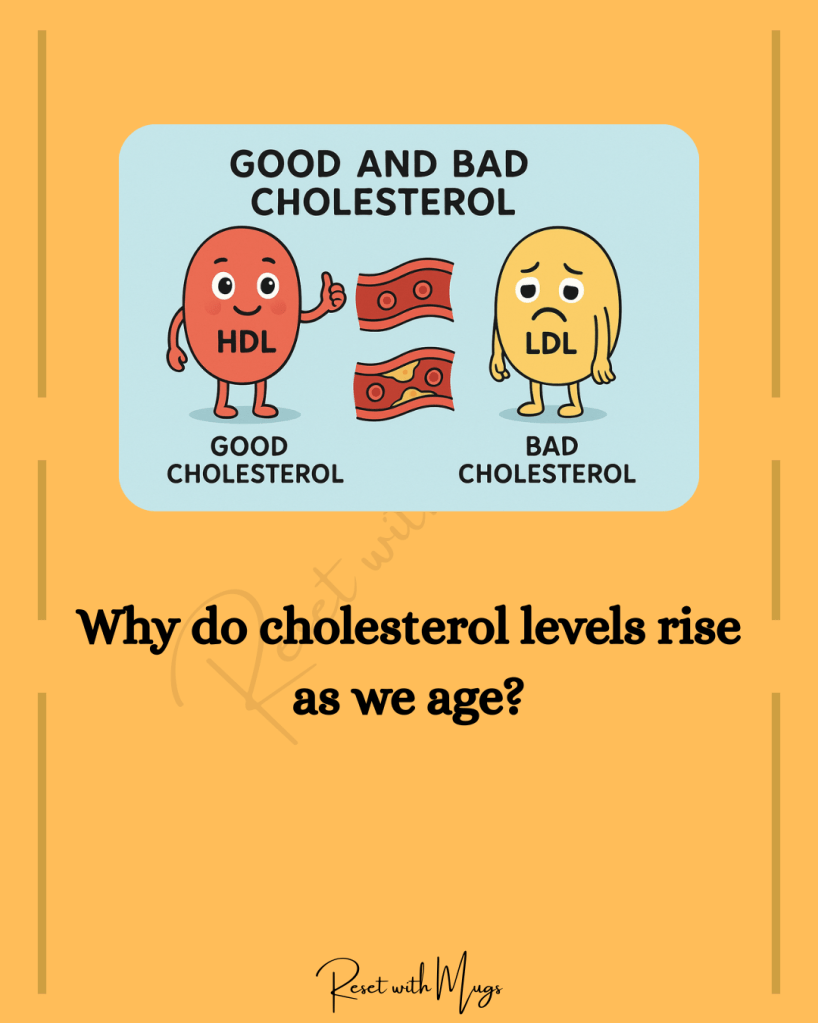
Cholesterol often gets a bad reputation because high levels of LDL (commonly called “bad cholesterol”) can clog arteries and lead to cardiovascular diseases (CVD). HDL, on the other hand, is known as “good cholesterol” because it helps clear excess cholesterol from the bloodstream, acts as an antioxidant, prevents LDL from oxidative damage, and supports reproductive health. However, elevated levels of both LDL and HDL aren’t ideal for long-term health.
Aging plays a significant role in rising cholesterol levels. Our metabolism naturally slows down over time—meaning that even if we eat the same foods we did decades ago, we’re more likely to gain weight. Reduced physical activity, poor eating habits, and hormonal shifts only add to the pickle.
Fortunately, the most effective way to manage cholesterol is through diet and lifestyle changes:
- Increase your intake of vegetables
- Cut down (do not completely quit) on simple carbs like white rice
- Increase lean proteins intake such as lentils, fish, and soy
- Add healthy fats from nuts and seeds
- Cook with whole herbs and spices for added health benefits
- Exercise regularly! It is the only way to boost your metabolism by building muscle!
But there’s one more key player in your cholesterol report we haven’t talked about yet—triglycerides. What exactly are they? To know more, read the next post!


Leave a comment