
“I was so tired I crashed on the couch.”
“I was watching Netflix and didn’t even realise when I dozed off.”
“I was up late working and couldn’t fall asleep once I got to bed.”
“I ate too late and struggled to sleep afterwards.”
How often do we casually say these things over a cup of coffee with friends?
Poor sleep has been so normalized; so often brushed off as a side effect of work stress that we forget one crucial thing: the basics.
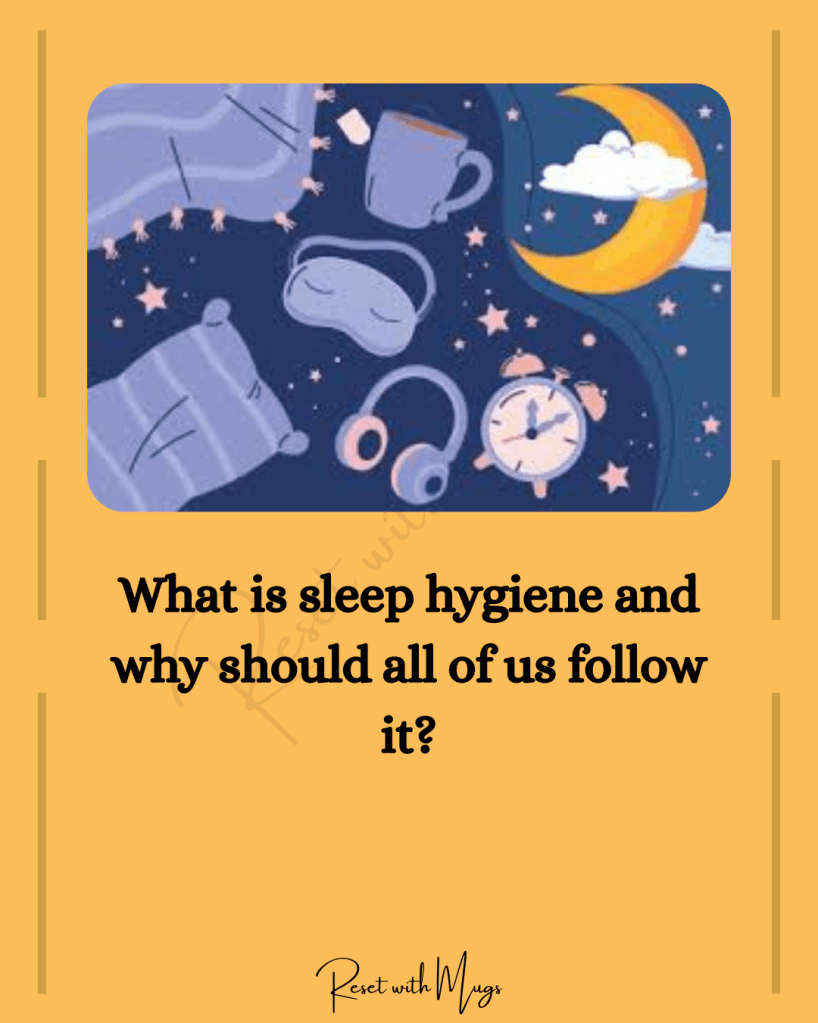
Enter: Sleep hygiene — a simple set of daily habits that help your body and mind prepare for restful sleep. It’s not just about what happens at bedtime; your sleep environment and lifestyle choices throughout the day play an equally important role.
How do you know if your sleep hygiene needs help?
- You struggle to fall asleep almost every night
- You wake up frequently during the night
- You don’t feel fresh or rested in the morning
- You feel sleepy or low-energy through the day, more often than you admit
To build consistent, quality sleep, focus on these three areas: Sleep Environment, Bedtime Routine and Morning Habits.
Sleep Environment
- Keep your bed clean and free from clutter or clothes
- Use comfortable pillows and blankets
- Maintain a room temperature that’s neither too hot nor too cold
- Use white noise or soothing sounds (like rain or waves) to block out disturbances
Bedtime Routine
- Go to bed at the same time every day — yes, even on weekends
- Begin winding down 30 minutes before your set bedtime:
- Switch off all screens
- Keep your phone away from your pillow
- Dim the lights and play calm, soothing music
- Change into separate clothes meant just for sleeping
- Freshen up: wash your face, brush your teeth, do your skincare/haircare
- Read a book or journal
- The moment you feel drowsy, go to sleep — don’t drag it out
Morning Habits (These really set the tone!)
- Wake up at the same time every day
- Step out into natural sunlight before noon
- Get physically active — through chores, a workout, even a grocery run
- Avoid caffeine after 4 PM
- Eat dinner early (ideally before 8 PM) so your body isn’t busy digesting at bedtime
- Avoid intense workouts close to bedtime — the adrenaline spike and heat can keep you wired
- Plan your next day in advance. A clear plan = a calmer mind = better sleep
Remember: Consistent quality sleep isn’t just about the number of hours; it’s about creating the right conditions for your body to truly rest and reset.
When it comes to people with sleep disorders like insomnia, sleep apnea, etc., sleep hygiene definitely helps them get better sleep but is not the only cure. Such people need treatment and therapy advised by an expert/doctor.
Disclaimer: If you’re not able to sleep well despite ensuring sleep conducive conditions around you, please see a doctor for medical advice.


Leave a comment