
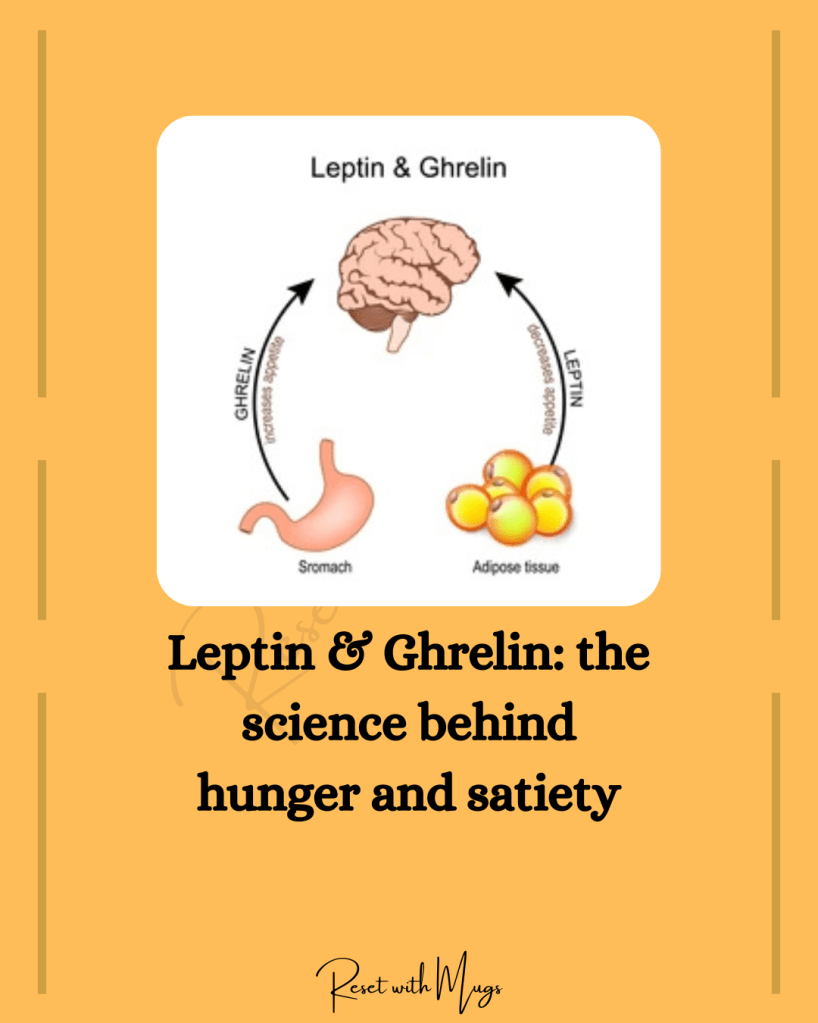
Often referred to as the body’s ‘see-saw’ hormones, leptin and ghrelin play a crucial role in regulating hunger and satiety at a biochemical level. Ghrelin, produced by the stomach when it’s empty, signals the brain that it’s time to eat. On the other hand, leptin, secreted by fat cells, communicates fullness and helps suppress appetite. Leptin also plays a vital role in maintaining energy balance by regulating how much we eat and how much energy we expend — essentially helping to keep our body weight stable.
Sounds pretty straightforward, right?
If this hormonal feedback loop worked flawlessly every day, obesity wouldn’t be the global concern it is today.
Here’s the twist: since leptin is produced by fat cells, it would make sense to assume that individuals with more fat (i.e., obese individuals) would feel fuller and eat less. But the reality is quite the opposite. Many people with obesity continue to gain weight because their brains stop responding to leptin’s “I’m full” signal. As fat accumulates, more leptin is produced — but the brain doesn’t register it. This condition is known as leptin resistance.
So, what causes this resistance to develop over time?
- Frequent consumption of calorie-dense foods (high in sugar and fat): These foods are enjoyable and addictive but often fail to satisfy hunger. As a result, we tend to eat past the point of fullness, consistently ignoring satiety cues — gradually leading to leptin resistance.
- Chronic low-grade inflammation: Poor dietary choices and high stress levels can cause inflammation in the body, which in turn disrupts the leptin-ghrelin balance.
- Irregular eating and sleeping patterns: Leptin levels naturally rise at night, around 9–10 PM, as part of the body’s circadian rhythm. Staying up late and snacking during this time can interfere with this cycle and contribute to resistance.
Although research on leptin resistance is still evolving, there are proven ways to help restore your brain’s sensitivity to leptin:
- Cut back on ultra-processed foods and make whole foods (like whole grains, legumes, vegetables, fruits, and nuts) a regular part of your meals.
- Include healthy fats in your diet to reduce inflammation and support hormonal health.
- Practice portion control to keep meals balanced and avoid overeating.
- Avoid late-night snacking and prioritize sleep as often as you can


Leave a comment