
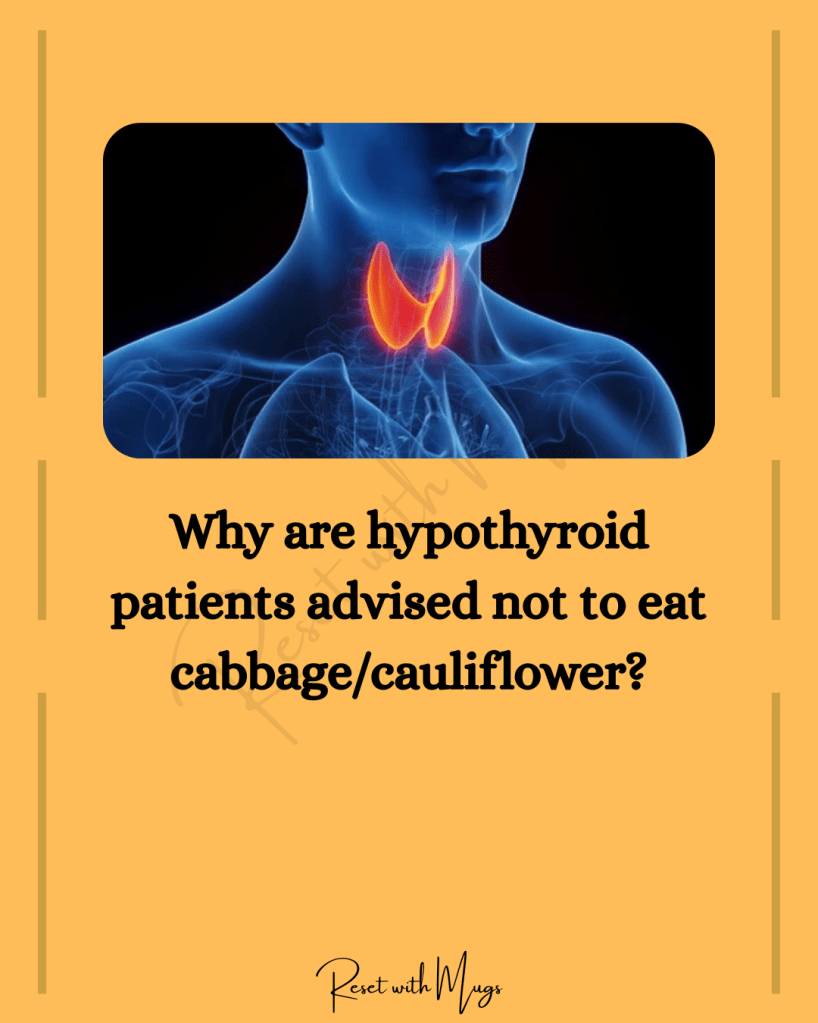
Cruciferous vegetables and even some nuts, millets and fruits, contain components called goitrogens which interfere with thyroid hormone production, leading to an enlarged thyroid. When the thyroid hormone falls, body can make up by releasing more thyroid stimulating hormone (TSH) however, a malfunctioning thyroid, instead of releasing additional thyroid hormones T3 and T4, ends up growing more cells leading to its enlargement. This condition is called as goitre.
Goitrogens are components including flavonoids, goitrins or thiocyanates found in foods like cabbage, cauliflower, soy, ragi, peanuts, peaches, sweet potato, strawberry and even corn to name a few. These components interfere with thyroid function by blocking uptake of iodine in the body, competing with iodine for absorption or inhibiting thyroid peroxidase enzyme activity.
The reason why this is a cause for concern is because the thyroid gland is very essential to regulate our metabolism. As small as the gland is and as cute as it looks like a butterfly, its role is a very powerful one for our daily function.
For individuals with adequate iodine intake and a healthy thyroid, goitrogens are generally not a cause for concern. They pose a problem only for those with hypothyroidism, iodine deficiency, or autoimmune thyroid disorders.
A promising way to reduce the effect of these goitrogens is by thoroughly cooking these specific foods by steaming, blanching, fermenting, etc. and consuming in small quantities. In addition to that, ensuring adequate iodine (salt, seaweed, dairy, eggs) and selenium (mustard, meat, sunflower seeds, cheese) supports thyroid function.
You can still enjoy these foods in cooked and regulated portions!


Leave a comment