
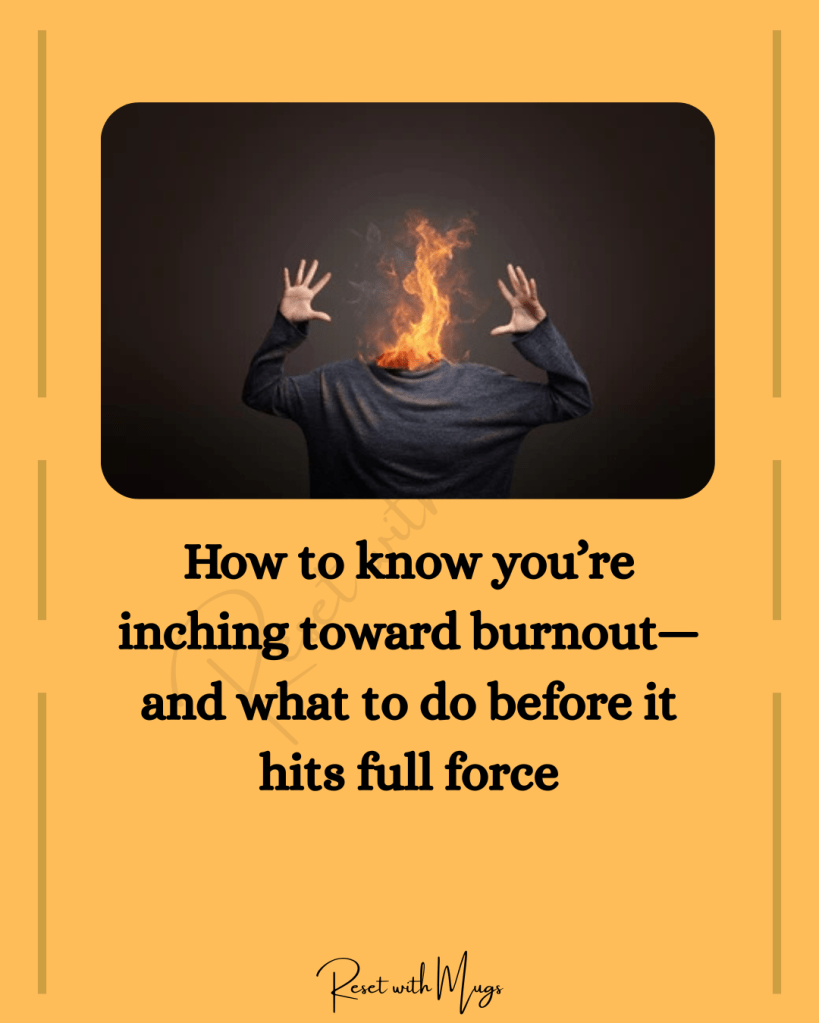
Burnout isn’t just “being tired” or “needing a break.” It’s a state of emotional, mental, and physical exhaustion that builds up over time—usually when you’ve been showing up for everything and everyone except yourself. Think of burnout as your mind and body waving a red flag, saying: “Something needs to change.”
Constant High Stress – When you’re always under pressure—deadlines, responsibilities, expectations—your nervous system stays switched on. Over time, this drains your energy reserves.
Lack of Rest or Recovery – Pushing hard without giving your body downtime is like running a race without ever stopping for water. Eventually, the system crashes.
Over commitment = Saying “yes” too often, taking on too much, or feeling responsible for everything makes burnout almost inevitable.
Emotional Load – Caring for others, managing conflicts, or being the “strong one” in your environment can leave you drained even if your physical workload isn’t high.
Misalignment – When your daily tasks don’t match your values, goals, or interests, work starts feeling heavy. You’re doing a lot—but nothing feels meaningful.
How can we cope with this?
Pause – You don’t have to take a long vacation. Even a deliberate pause helps your body come out of “survival mode.” A walk, a quiet coffee, a 10-minute breather—these count. Intentionally make such breaks a part of your routine to ensure you get breaks in between the hustle.
Sleep – You need to focus on getting sleep like it is your job. There is absolutely nothing that resets your body and mind like a good night’s sleep!
Nourishing meals – Your stress levels might tempt you into ordering that pizza and dessert but I kid you not, focusing on nutritious food will go a long way to keep your mind healthy.
Exercise – No, it is not a punishment. When you exercise regularly your body learns to process the daily stress and burn it off. So essentially you are giving your body an outlet!
Set Clear Boundaries – Burnout often comes from giving too much. You’re allowed to say:
- “Not today.”
- “I can’t take on more.”
- “I need support.”
Boundaries protect your energy—not your ego.
Delegate, drop, or delay – Not all problems need your immediate attention, nor are you obligated to solve every problem you encounter. Sometimes, remembering that you are not a one stop solution to every issue around you really helps with taking it easy and letting things slide. You might have multiple balls to juggle, but each day you prioritise which ones to hold and drop.
Do one restorative activity daily – This can be as simple as drawing, journaling, listening to music, stepping outdoors, talking to someone you trust or reading a book. Anything but scrolling through social media!
Seek support when needed – Talking to a coach, therapist, mentor, or even a close friend helps you process what you’re feeling and create a plan to move forward. Burnout doesn’t mean you’re weak—it means you’ve been strong for too long without support.
With awareness, boundaries, and intentional recovery, you can come back more balanced, energised, and grounded.


Leave a comment